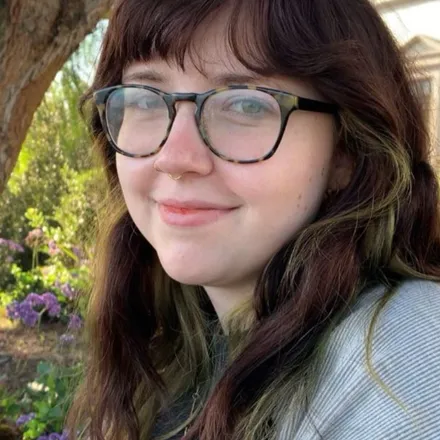
Callista Cox
Associate Marriage & Family Therapist
California
License AMFT 141253, Supervised by Kristen Crowe, LPCC 5451
Online TherapyAccepting New Clients
About Callista
Therapy for queer, trans, gender-expansive, disabled, neurodivergent, grieving, and caregiving folks and their loved ones.
Out-of-Network Cost
$100 - 195 per session
Sliding scale
Top specialtyTrauma and PTSD
How do you work with clients with trauma and PTSD?
I provide the following treatments for PTSD and CPTSD:
Prolonged Exposure (PE) - a first-line treatment
Research shows it is effective in reducing symptoms and improving overall functioning. Though it might sound scary, we will go at your pace, monitor your stress, and use grounding skills throughout the process. I will not be your enemy, but your guide, walking hand in hand with you as we reduce the avoidance that is keeping you stuck. Together we will practice standing in the face of the things that feel most triggering and remembering that you are here and alive in the now.
Narrative Exposure Therapy (NET) - a second line treatment
Research shows that this is has been most effective in relationship to political and cultural trauma. By re-telling and re-authoring your story, we can see it from a new perspective and see how the traumatic events have impacted who you are today. It might feel like we are writing a book, if that book had chapters on your sensory information, your feelings, thoughts, and visual memories. At the end of treatment we can hold a tangible biography or creative artwork that speaks to the life you have lived.
I will use a multi-modal or eclectic approach, blending a trauma treatment with body-awareness, DBT mindfulness skills, and ACT value identification skills so that you can feel supported as a whole person. Similarly to how I talk about gender, just because you come to me with trauma, doesn’t mean I automatically become your Trauma Only Therapist™ We can work on what comes up for you, even if you might think it’s “a lot.” My job is to hold that space for you. As a provider who has lived experience with CPTSD and PTSD, I learned first hand just how important trauma treatment is.
There are many other first-line and second-line treatments for PTSD and C-PTSD. If you would like to explore other treatment options such as Cognitive Processing Therapy or EMDR, please reach out and I can connect you to colleagues who are currently trained in these modalities. Additionally if you would like to try holistic and somatic-based treatments such as Somatic Experiencing for trauma, I have colleagues who I would highly recommend.
Top specialtyTransgender
How do you work with clients with transgender issues?
"Imagine you are working all day long, busy, and unable to think about anything else. You walk by a restaurant and realize you are hungry, that you haven’t eaten all day. The smell didn’t make you hungry, but it helped you connect to your body and name what has been happening for you.” - Dr. Aydin Olson Kennedy on Gender Dysphoria Noise
Whether you noticed it early on in childhood, or later as an adult, the experience of coming in to one’s gender identity can be life changing. As we start to break down the “should”s & “have to”s we were taught, we might feel stressed to do this on our own.
Maybe we’ve yet to think about our gender identity but have heard this gender dysphoria noise in the back of our minds. “Women have to….” “Men should always….” “Intersex people shouldn’t…..”
Gender dysphoria noise not only comes from what we have heard others say, but the things we think about our own identities, bodies, and relationship to others. When we create safety, we can start to feel gender euphoria.
Coming in to one’s identity can be a multi-facted process, one that starts with noticing and naming what is happening for you, and then safely inviting others in to your experience. The reactions or lack of reactions we get from others when we invite them in can bring up feelings of rejection, invalidation, and indifference. Sometimes even being celebrated can feel overwhelming, as you might start to think back on time missed. Sometimes we can even detransition to attempt to block out the gender dysphoria noise to feel safe.
I have received training from the TransYouth Care Symposium on writing WPATH letters and providing gender affirming psychotherapy. If you are seeking a letter for gender-affirming care such as hormone replacement therapy or surgery, we will do an assessment that may take between 1-3 sessions. I can provide the WPATH letter within one week of completing the assessment at no additional cost to you.
Psychotherapy is a space to process what is painful and to share what is joyful. Just because you experience gender dysphoria noise doesn’t mean that I will become your Gender Only Therapist™ Your therapy is for you and for you to decide what is important. If you are being thoughtful in exploration or discussion of transition, please know this is a no-shame space and I will not push you to make any decision.
About Me
Why did you become a therapist, and what motivates you to continue?
I sought out therapy as an adult due to my own experiences of trauma, mental illness, family stress, and its impact on my body. I found myself gravitating towards psychology, creative arts, philosophy, and systemic theory in college. My own experiences in therapy have impacted my work, as well as reading the work of Disability Justice activists.
About Me
For people that are hesitant to try therapy, what do you wish you could tell them?
The reason you come to therapy is up to you - I provide a safe space for you to reflect, heal, rage, and reclaim. Together we will come to understand what are the values you hold that make life worth living and make a plan of what to do when it doesn't feel possible to keep on going. If you only have 16 hours in an average day, we will use the 1 hour we meet per week (0.9% of your time) to build intentional relational and survival skills that can carry over into the rest of your life.
Therapy should not be an echo chamber and a diagnosis should not be the answer to all questions. You are the expert in your experience. Therapy should be give and take, relational, and worth your time.
Specialties · Schizophrenia and Psychotic Disorders
How do you work with clients with schizophrenia and psychotic disorders?
When we think about psychosis, we are thinking about a collection of experiences that seem disorienting, confusing, or other-wordly to the person experiencing them. Sometimes symptoms can be scary, frightening, or defeating. Other times, they can be bothersome or annoying. Many times people do not seek treatment for what clinicans label as “psychosis” because they experience these symptoms as helpful, ancestral, connecting, or beautiful. Mad Liberation leaders have described “psychosis” as a clinical descriptor that can be othering, whereas “altered states” encapsulates all the experiences of people with these gifts and connections.
When you come to therapy with any of these experiences, we will use the terms you choose. Diagnosis is not the goal, but treatment of what is hurting or causing suffering is. If we notice that these symptoms get in the way of daily functioning, we might do a full assessment, called the SIPS, which stands for Structural Interview for Psychosis Risk Syndromes. This assessment can be useful to identify if you are at risk for developing a more long-term disorder or if you are experiencing a short term burst of symptoms.
I am trained in Cognitive Behavioral Therapy for Psychosis (CBTp), which can help us break down the beliefs and thought patterns that keep you up at night. I also practice Dialectical Behavioral Therapy and Acceptance and Commitment Therapy, which are two important modalities to help in times of crisis and reconnection to your values. I also practice evidence-based treatments for trauma: Prolonged Exposure (PE) and Narrative Exposure therapies (NET). I believe when someone comes to therapy with psychosis or altered states, it is most likely that they are processing trauma, grief, or having to navigate crises without support. Research shows that psychosis often happens as a result of “too much” happening all at once. We can work together to build safety and stability, while also focusing on your goals.
Specialties
Trauma and PTSDTransgenderBipolar DisorderBorderline Personality (BPD)Chronic Illness and PainFamily TherapyIndividual TherapySchizophrenia and Psychotic Disorders
Client Focuses
AdultElders (65+)TeenNon-BinaryWhiteLGBTQ+Secular and Non-Religious
Approaches
Acceptance and Commitment (ACT)Dialectical Behavior (DBT)ExistentialFamily SystemsHumanistic