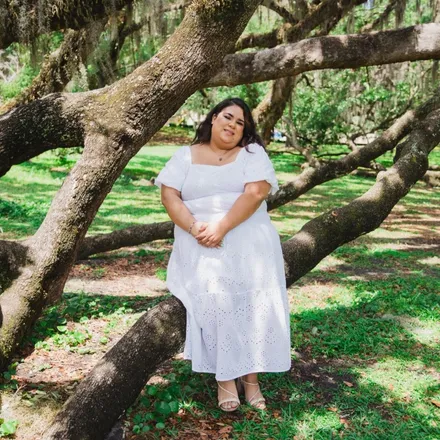
Monica Camacho
Online & In-PersonAccepting New Clients
About Monica
Monica Camacho is a dedicated therapist passionate about creating safe, affirming spaces for healing and growth. She integrates evidence-based approaches with a deep understanding of identity, culture, and lived experience. Monica’s work focuses on helping individuals navigate challenges such as trauma, neurodivergence, family dynamics, and identity development, while honoring each person’s unique story. She is committed to breaking generational cycles, amplifying marginalized voices, and empowering clients to find strength, balance, and authenticity in their lives.
Insurance Accepted
AetnaBlue Cross Blue ShieldCignaFlorida Blue
Out-of-Network Cost
$70 - 125 per session
Sliding scale
Approaches · Dialectical Behavior (DBT)
How does dialectical behavioral therapy (DBT) work and how can it help?
Dialectical Behavior Therapy (DBT) is an evidence-based therapy that combines acceptance and change. It was originally created to help people with intense emotions, self-harm, and borderline personality disorder, but it’s now widely used for many challenges—including bipolar disorder, ADHD, anxiety, depression, and trauma. DBT teaches four core skill sets: mindfulness (staying grounded in the present), distress tolerance (getting through crises without making things worse), emotion regulation (understanding and managing intense feelings), and interpersonal effectiveness (building healthier, more balanced relationships). In therapy, I help clients learn and practice these skills while also validating their lived experiences and the pain they carry. DBT can help reduce impulsivity, stabilize mood, improve relationships, and build a stronger sense of self. At its heart, DBT empowers people to hold both truths—that they are doing the best they can right now, and that they can still make meaningful changes to create a life worth living.
Specialties · ADHD
How do you work with clients with ADHD?
When working with clients who have ADHD, I take a strengths-based and individualized approach. I help clients understand how ADHD shows up in their daily life—whether through attention challenges, impulsivity, or difficulties with organization—and we work together to build strategies that fit their unique needs. I often use tools from CBT and DBT to help with emotional regulation, mindfulness, and breaking tasks into manageable steps. We also focus on reducing shame and reframing ADHD as a different way of experiencing the world rather than a flaw. My goal is to create a supportive space where clients feel understood, learn practical coping skills, and build confidence in navigating work, school, relationships, and everyday life.
Specialties · Bipolar Disorder
How do you work with clients with bipolar disorder?
When I work with clients who live with bipolar disorder, I combine evidence-based approaches like DBT with an understanding that comes from both professional training and lived experience. DBT offers powerful tools for managing the emotional intensity, impulsivity, and relationship struggles that often come with bipolar—skills like mindfulness, distress tolerance, and emotion regulation can make mood episodes easier to navigate and reduce long-term disruption. At the same time, I know that bipolar disorder is not the whole of someone’s identity. In therapy, we explore patterns, triggers, and strengths while building routines and supports that fit the client’s real life. I work to normalize the ups and downs, reduce shame, and help clients create strategies for stability that are sustainable, compassionate, and flexible. My goal is to walk alongside clients, not only as a therapist, but as someone who deeply understands how challenging and isolating bipolar disorder can feel, and to support them in building a life worth living on their own terms.
Specialties · Spiritual or Religious
How do you work with clients with spiritual or religious issues?
When I work with clients navigating spiritual or religious issues, I take a trauma-informed, client-centered approach. Many people come to me carrying wounds from rigid belief systems, religious abuse, or environments where questioning was not safe. I provide a space where clients can openly process their doubts, pain, and questions without judgment. Together, we explore the impact of religious experiences on identity, relationships, and mental health, and we work to separate a client’s authentic values from messages rooted in fear, shame, or control. For clients in deconstruction, I offer support in untangling harmful narratives, exploring spirituality (or non-spirituality) on their own terms, and rebuilding a sense of self that feels whole and autonomous. My goal is never to tell someone what to believe, but rather to honor their story and empower them to find healing, freedom, and meaning in ways that align with who they truly are.
Specialties · Self-Harming
How do you work with clients with self harming issues?
When I work with clients who struggle with self-harm, I create a compassionate, nonjudgmental space where we can safely explore the underlying reasons for the behavior—often emotion regulation difficulties, trauma, dissociation, or intense shame. My approach is collaborative and pragmatic: I begin with a careful risk assessment and then co-create a personalized safety plan that includes early warning signs, coping strategies, people and supports to contact, and steps for reducing immediate risk. Therapeutically, I draw heavily on DBT skills (distress tolerance, emotion regulation, mindfulness, and interpersonal effectiveness) alongside trauma-informed and attachment-focused work. We practice alternative coping skills in session, build relapse-prevention plans, and slowly process the painful emotions and experiences that drive self-harm when the client is ready. I involve family or caregivers when appropriate and with consent, and I coordinate with psychiatrists or medical providers if medication or medical follow-up is needed. Throughout treatment I prioritize dignity and agency—helping clients replace shame with self-compassion, strengthen safety and coping, and build a life in which the urge to self-harm reduces over time. I also routinely monitor risk and revise the safety plan as things change.
Location
853 State Road 436
suite 1091
Casselberry, Florida 32707
Specialties
ADHDAutismBipolar DisorderBorderline Personality (BPD)Career CounselingChild or Adolescent Therapy
Client Focuses
PreteenTeenAdultHispanic or LatinAsexualSecular and Non-ReligiousSpanish
Approaches
Dialectical Behavior (DBT)Expressive ArtsNarrativePerson-Centered