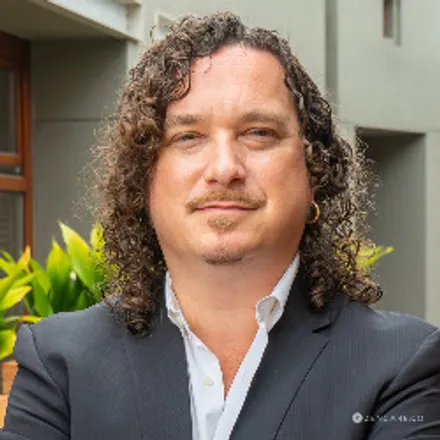
David Gatta
Online & In-Person
About David
Welcome. I’m Dr. Gatta but if we work together please call me David. Good therapy is all about a trusting relationship. Over the course of my 13 year career I have had the privilege of working with a diverse group of people from college age students to senior citizens. My passion is helping people understand who they are, where they would like to go in life and what might be preventing those processes.
From this standpoint my treatment philosophy is to address underlying causes rather than just symptoms. Doing so is the only way of achieving lasting substantive change. In order to do that I use a holistic approach, meaning I see each individual as a sum of their total life experiences together with their sociocultural contexts.
I have extensive experience working with family of origin issues, trauma, substance abuse, depression and life transitions (including grief and loss). My background is in clinical psychology where my doctoral dissertation explored dreaming as a theoretical form of thinking (cognition). I also have a background in neuroscience and the humanities . I have taught courses on trauma and recovery, addiction, grief and psychopathology.
Out-of-Network Cost
$150 - 230 per session
Sliding scale
Couples Therapy
How do you work with clients with relationship issues?
Relationship issues are as complex as people. Current relationship problems often have their origin in the past an can be the result of issues related to early life, attachment and family of origin traumas. I explore the way past relationships have a influence on current ones and help people both see and break problematic patterns.
Approaches · Cognitive Behavioral (CBT)
How does cognitive behavioral therapy (CBT) work and how can it help?
CBT is primarily a method of symptom reduction that helps in the shorter term but does very little to address the underlying causes. Integrating emotional works as well as insight building is necessary for more lasting relief.
Specialties · Anxiety
How do you work with clients with anxiety?
Clients with anxiety are not all the same. No two person experience symptoms in the same way for the same reason. There is no one-sized fits all approach. I tailor everything I do with folks to truly understand the origin of their anxiety. Without doing this it can’t actually get better. Sometimes I work with my group practice partner to teach emotional regulation skills and sometimes we help patients connect with a prescriber if indicated.
About Me
Why did you become a therapist, and what motivates you to continue?
I became a therapist because I always saw my path as one of a healer and it was my own experience of being in therapy that made it clear that is my calling. I think what motivates me to continue is the satisfaction I get from seeing people actually grow and change.
Specialties · Depression
How do you work with clients with depression?
Depression is ultimately about loss of some particular kind. It may have to with underlying attachment trauma, abandonment or emotional deprivation. No two stories of depression are the same. I focus on life context to understand the origin and then help people make new relational connections. Sometimes behavioral modifications need to be incorporated so we will get plans together to counteract some of the symptoms.
About Me
For people that are hesitant to try therapy, what do you wish you could tell them?
I completely understand the normal hesitation to start a process like therapy. It is a vulnerable thing to do but I know from personal and professional experience that it has the power to transform lives. Working with a good therapist should be safe, measured and warm. It is a place where you can feel safe enough to truly express yourself and you don’t have to do that alone. Everyone’s pace is different and the approach should always be tailored to where you are.
About Me
What should people thinking about working with you, know about you?
I like to say that you are always becoming the person that you are. That process of learning who you are and where you’d like to be gets disrupted by both the present and the past. I care about the individual in their entire life context. Everything you say to me is important and I truly take my time to get to know you and help you better express yourself.
About Me
What does a typical session with you tend to look like?
A typical session with me is usually every open-ended unless you have something very targeted you’d like to focus on. I tend to be very creative in my thinking and expansive. I offer a safe, nonjudgmental space where you will be able to truly tell me what is on your mind.
Specialties · Addiction
How do you work with clients with addiction?
I see addiction as a fundamental traumatic experience of loss. When something is missing or when something in life has harmed you sometimes people use substances as a distraction from pain or as a harmful substitute for love.
Approaches · Psychodynamic
How does psychodynamic therapy work and how can it help?
Psychodynamic or psychoanalytic therapy is something I have additional specialized training in. Essentially these methods take into consideration the underlying issues from the past that are often outside awareness. Through the course of therapy they can be uncovered and connected in a collaborative way to the issues on is experiencing in the present.
About Me
How can you provide care remotely?
My practice is 50% in-person and 50% remote.
Specialties · Sexual Abuse
How do you work with clients with sexual abuse issues?
I have a lot of experience working with survivors of sexual abuse. In my early career I worked in university and college counseling where I helped mostly young people find and voice and recover. Later in my career I have also worked with adults who have suffered this type of abuse. Working with survivors is about detoxifying experiences of shame, guilt, and gaslighting. I have much more to say on this subject as I taught a course called trauma and recovery. If this is something you were subjected to I can assure you that I can help you regain your life and sense of self.
Location
5655 College Avenue Suite 316 C
Oakland, California 94618
Specialties
AddictionAnxietyGriefSelf EsteemSexual AbuseTrauma and PTSD
Client Focuses
AdultElders (65+)
Approaches
Attachment-basedCognitive Behavioral (CBT)Emotionally Focused (EFT)ExistentialFamily Systems