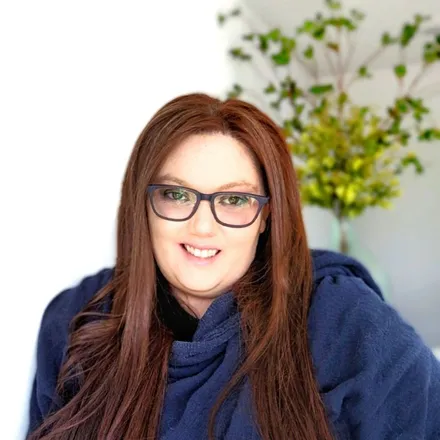
About Jenn
Hi, I’m Jenn. I'm a Resident in Counseling and the founder of The Mind Garden, a boutique, online-only practice in Virginia. I specialize in helping millennials who are exhausted from holding it all together. If you are the person everyone else relies on, but you feel like you have no one to lean on yourself, you are in the right place. If you struggle with people-pleasing, perfectionism, or the inability to say "no" without guilt, I can help you move from surviving your life to inhabiting it. My approach is warm, evidence-based (IFS & CBT), and entirely human-first.
Out-of-Network Cost
$60 - 180 per session
Top specialtyAnxiety
How do you work with clients with anxiety?
For many of my clients, anxiety isn’t just "worrying"—it’s a sophisticated radar system they developed to keep themselves safe. You might find yourself constantly scanning for other people’s moods ("walking on eggshells") or over-preparing for every possible outcome. This is often linked to the "Fawn Response." I work with anxiety by helping you understand why your alarm system is going off, thanking it for trying to protect you, and then teaching you practical skills to dial down the volume so you can relax.
Approaches · Cognitive Behavioral (CBT)
How does cognitive behavioral therapy (CBT) work and how can it help?
Cognitive Behavioral Therapy (CBT) is about fact-checking your brain. We all have an "Inner Critic" that tells us lies like "I'm not good enough" or "If I make a mistake, everyone will hate me." CBT helps us catch those automatic thoughts, put them on trial, and replace them with more realistic, compassionate thoughts. It is a practical, skills-based approach that gives you tools you can use immediately.
About Me
Why did you become a therapist, and what motivates you to continue?
My path to therapy wasn't a straight line. I actually began in computer programming, but after navigating my own significant life transitions and personal losses, I realized that the "code" I really wanted to understand was the human mind. Through my own therapy, I discovered that my struggles with depression and anxiety didn't start in my adult life—they were rooted in a childhood spent navigating a household with very rigid expectations and unpredictable emotional dynamics.
I spent years "walking on eggshells," suppressing my own needs to manage the moods of the adults around me. I didn't realize until much later that I had developed a "fawning" response—merging with others' expectations to stay safe. Discovering this gave me the freedom to finally be me. That is what drives me now: There is no better feeling than being able to wholeheartedly be yourself, not who others want you to be. I want to hand that freedom to my clients!
Specialties · Depression
How do you work with clients with depression?
I often view high-functioning depression as the result of "depressing" your true self for too long. When you spend years prioritizing everyone else’s needs, your own spark starts to fade. In our sessions, we will work on reconnecting you with your own wants and needs. We’ll use small, manageable steps to help you engage with life again, not out of obligation, but out of genuine desire.
About Me
For people that are hesitant to try therapy, what do you wish you could tell them?
I get it. It feels weird to open up to a stranger. But if you are thinking about therapy, that is your intuition talking—and it’s telling you that you need support. My advice is to listen to that gut feeling. It knows help is out there. Remember, you aren't signing a life contract; you're just having a conversation. I offer free 30-minute consultations specifically so you can "vibe check" me without any obligation. If we aren't a match, that's okay! But don't deny your intuition before you even try.
About Me
What should people thinking about working with you, know about you?
I am just like you. I am a Millennial who loves pizza, video games, comedy, and nature. I experience stress, I have to manage my own perfectionism, and I am a "Recovering Fawner"—it is something I work on every single day. I don't claim to be a guru on a mountaintop who knows all of life's answers—I'm a fellow traveler who happens to have the map. I combine my professional training with my own lived experiences so I can help you navigate your journey a little more easily.
Specialties · Trauma and PTSD
How do you work with clients with trauma and PTSD?
I specialize in the Fawn Response to trauma. While some people fight or flee, "fawners" learned to survive by merging with the needs of their abuser or caregiver. I help clients unlearn this survival strategy. We move slowly, establishing safety first. We don't dive into the deep end until you know you can swim. I use parts work (IFS) to help heal the younger versions of you that are still scared.
About Me
What do therapy sessions with you look like?
My practice is "Boutique," meaning it is designed for YOUR life, not your insurer.
– Flexible Pacing: We can meet for 30 minutes or 2 hours, weekly, bi-weekly, or ad hoc.
– Human Policies: I don't charge cancellation fees; because life happens.
– The Rose Reward: I actually offer free sessions to reward you for consistency.
– The Vibe: It’s organic but structured. We will laugh, we might cry, and we will do deep work, but we will do it at a pace that feels safe for you.
Approaches · Internal Family Systems (IFS)
How does internal family systems (IFS) work and how can it help?
Internal Family Systems (IFS) is a game-changer. It views the mind as a collection of "parts." You might have a "Manager" part that is a perfectionist, or an "Exile" part that holds your pain. Instead of fighting these parts, we get curious about them. We learn that even the destructive behaviors (like fawning or procrastination) are actually parts of you trying to protect you. By understanding them, we can heal them.
Specialties · ADHD
How do you work with clients with ADHD?
Many of my clients are high-masking ADHDers who use anxiety and perfectionism to compensate for their executive dysfunction. This leads to burnout. I work with ADHD by removing the shame. We stop trying to force your brain to be "neurotypical" and start finding systems that work for your unique brain.
About Me
How can you provide care remotely?
Teletherapy allows us to do deep work from your "safe space." You can be in your pajamas, wrapped in your favorite blanket, with your cat on your lap. For clients with anxiety or trauma, removing the stress of a commute and a waiting room often allows them to open up faster. I use a secure, HIPAA-compliant video platform, and I’ve found the connection we build through the screen is just as powerful as being in the same room.
Specialties · Self Esteem
How do you work with clients with self esteem issues?
I find that low self-esteem in my clients usually comes from a belief that they have to "earn" their worth through productivity or helping others. We work on shifting your identity from a "Human Doing" to a "Human Being." You don't have to be useful to be valuable. We will build self-esteem by keeping small promises to yourself and celebrating your inherent worth.
Approaches · Trauma Focused
How does trauma focused therapy work and how can it help?
Trauma-focused therapy is less about "retelling the story" and more about understanding how the story shaped your nervous system. We focus on how trauma shows up in your body and your behaviors today. It helps by reducing the intensity of your triggers, so you can navigate the world without constantly feeling like the other shoe is about to drop.
Specialties · Stress
How do you work with clients with stress?
Millennials are the "burnout generation," often juggling high-pressure careers, financial stress, and family expectations. I help clients distinguish between "stress" (the external pressure) and the internal reaction to it. We will focus heavily on boundaries. Often, stress is a symptom of saying "yes" to too many things. We will practice the art of the "Guilt-Free No."
Specialties · Personality Disorders
How do you work with clients with personality disorders?
I approach this through a compassionate, relational lens. Whether you are navigating your own diagnosis or you grew up in a chaotic environment where you had to manage someone else's volatile moods or rigid thinking, we focus on emotional regulation. I help clients understand the "why" behind their reactions. We work on building a strong sense of self, establishing healthy boundaries, and learning how to navigate relationships without losing your own identity in the process.
Specialties
Individual TherapyAnxietyADHDDepressionPersonality DisordersSelf EsteemStressTrauma and PTSD
Client Focuses
AdultWhiteStraight / HeterosexualSecular and Non-Religious
Approaches
CoachingCognitive Behavioral (CBT)Internal Family Systems (IFS)Reality TherapyTrauma Focused