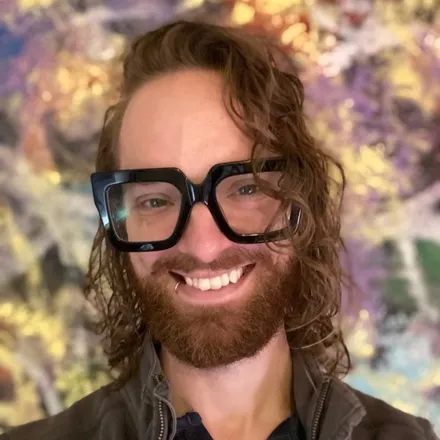
Z. Hamilton Avery
Licensed Clinical Social Worker (LCSW)
Tulsa, Oklahoma
Online TherapyAccepting New Clients
About Z. Hamilton
I provide affirming online psychotherapy to adolescents (13+) and adults in Oklahoma, Florida, South Carolina, and Idaho. I also provide non-clinical coaching to teens and adults nationwide. People come to my practice for many different reasons. Some are dealing with significant distress or a specific mental health concern. Others are trying to understand themselves better, navigate a transition, change patterns that no longer serve them, or invest in their well-being before life reaches a crisis point.
I commonly work with stress, anxiety, depression, trauma and PTSD, chronic illness and pain, grief and loss, suicidal thoughts, burnout, identity-related concerns, major life transitions, serious mental illness, and complex psychosocial stressors. I also enjoy working with people who want to develop greater self-understanding, resilience, self-compassion, psychological flexibility, or a stronger connection to their values and the parts of life that matter to them.
My approach is humanistic, person-centered, strengths-based, trauma-informed, harm-reduction oriented, inclusive, and affirming. I do not believe therapy should force people into a predetermined model of what health, relationships, identity, or a meaningful life should look like. Each person brings their own history, circumstances, strengths, needs, values, preferences, and goals into the room. Those differences should shape the work we do together.
My clinical training includes CBT, DBT, ACT, motivational interviewing, compassion-focused therapy, EMDR, trauma-focused interventions, somatic approaches, expressive approaches, mindfulness, and mind-body practices. I use these approaches flexibly rather than following one model for everyone. Therapy might involve learning concrete coping skills, understanding emotional or behavioral patterns, processing difficult experiences, developing self-compassion, strengthening emotional regulation, clarifying values, or experimenting with different ways of responding to situations that feel stuck. We pay attention to what is actually useful and change course when something does not fit.
I also take a broad view of what influences mental health. Thoughts and emotions are important, but they are only part of a person's experience. Physical health, chronic pain, relationships, identity, family, work, environment, culture, resources, nervous system responses, past experiences, and current circumstances can all affect well-being.
Understanding those connections can sometimes make an experience that seemed confusing or disconnected begin to make more sense. My practice is 2SLGBTQIA+ affirming and neurodiversity affirming. I respect each person's autonomy and the language they use to understand themselves. Identity can be central to therapy when it is relevant, but I do not assume that someone's sexuality, gender, neurodivergence, relationships, or other identities must become the subject of treatment. Clients should have room to decide what matters and what they want to explore.
My style is warm, curious, collaborative, practical, and often humorous. I want clients to feel comfortable asking questions, disagreeing, giving feedback, or telling me that something is not working for them. You do not need to show up already knowing exactly what you need from therapy. Part of the process can be figuring that out together.
My professional background extends well beyond the therapy office. Since 2010, I have worked across outpatient psychotherapy, integrated primary care, community mental health, hospice and end-of-life care, mobile crisis services, 911 emergency communications and first response, school-based services, health education, and home- and community-based settings. I have supported thousands of adolescents, adults, and older adults across clinical, medical, crisis, educational, nonprofit, and community environments. My interdisciplinary education spans pre-nursing, psychology, and social work.
I also have extensive training in bodywork, yoga, meditation, energy work, and complementary and alternative medicine. I am a Certified Massage Therapist, Certified Reiki Master trained across multiple lineages, and Certified Yoga Teacher with more than 1,000 hours of accredited training, much of which I completed in India. My training includes massage therapy, Thai yoga massage, myofascial release, craniosacral therapy, Reiki and energy work, Chinese and Japanese acupuncture, mindfulness, meditation, Hatha yoga, Kundalini yoga, yin yoga, restorative yoga, and trauma-informed yoga. This work represents another part of my professional background and my longstanding interest in the relationships among mind, body, health, and lived experience.
Coaching is separate from my psychotherapy practice and does not involve diagnosing or treating mental health conditions. My coaching work focuses on areas such as personal growth, behavior change, practical skills, habits, values, goals, life transitions, mindfulness, self-compassion, resilience, and well-being. It is available to teens and adults throughout the United States.
I also work as an educator, speaker, writer, curriculum developer, yoga and meditation teacher, and integrative wellness practitioner. Through Therapy with Z, LLC, I develop classes, workshops, professional trainings, speaking engagements, retreats, and other educational experiences. Topics include mental health, trauma, suicide prevention, chronic illness and pain, stress management, coping skills, mindfulness, self-compassion, meditation, yoga, complementary and alternative medicine, integrative wellness, and 2SLGBTQIA+ affirming care.
My educational programs can be designed for the general public, helping professionals, healthcare and behavioral health professionals, workplaces, organizations, and communities. Some focus on introductory education and practical skills. Others provide advanced professional education or structured practitioner training. Programs may incorporate research, education, discussion, reflection, experiential practice, movement, mindfulness, and skill development. I also create original handouts, worksheets, workbooks, guides, manuals, and other resources that participants can continue using after a program ends.
Across psychotherapy, coaching, education, and integrative wellness, I am interested in helping people understand themselves and their experiences more clearly. I want people to have useful options rather than prescriptions for who they should become. The work can involve learning, questioning, experimenting, practicing, changing, or simply developing a different understanding of something that has been difficult to navigate.
Insurance Accepted
AetnaAllegianceBlue Cross Blue Shield OklahomaCarelon Behavioral HealthCignaEvernorthMedicare
Out-of-Network Cost
$75 - 150 per session
Sliding scale
Top specialtyAnxiety
What's your approach to anxiety, and what does progress look like for clients?
I am interested in understanding what anxiety is doing, not just how to make it disappear. We may look at worry, avoidance, uncertainty, physical sensations, thought patterns, past experiences, or situations that keep anxiety going. Depending on what fits, we might use cognitive and behavioral strategies, mindfulness, acceptance-based approaches, self-compassion, grounding, or practical changes in daily life. Progress does not have to mean never feeling anxious. It may mean anxiety takes up less space, you recover more easily when it shows up, uncertainty becomes more tolerable, or you become increasingly able to make decisions based on your values rather than what fear is telling you to avoid.
Specialties · Trauma and PTSD
What's your approach to trauma and PTSD, and what does progress look like for clients?
I do not believe trauma work should begin with pressure to tell every detail of what happened. We can first understand how past experiences are affecting life now and develop ways to respond to distress, triggers, emotions, relationships, or nervous system reactions. Processing difficult experiences may become part of the work when it is appropriate and something you want to do. My training includes EMDR and other trauma-focused cognitive, behavioral, mindfulness-based, somatic, and mind-body approaches. Progress might mean having more choice in how you respond, feeling less controlled by triggers or memories, trusting yourself more, reconnecting with parts of life that trauma has disrupted, or simply experiencing more moments when the past does not feel like the present.
About Me
What should someone thinking about working with you know about you?
I take the work seriously without believing therapy always has to feel serious. I am curious, direct, warm, and comfortable with humor when it fits. I will ask questions and sometimes challenge you, but I am not interested in telling you who you should be or what your life should look like. I am comfortable with complexity, uncertainty, difficult conversations, and people who do not fit neatly into categories. You are allowed to disagree with me, question something I suggest, change your mind, or tell me that an approach is not working. I would rather know so we can figure out something better together.
About Me
What do sessions with you look like, and what can a new client expect?
There is no standard agenda that every session has to follow. Some days we may have something specific to work on. Other days we may start with what has happened since we last met and discover where the conversation needs to go. I can be structured when structure is useful and leave more room when it is not. We might talk something through, practice a skill, examine a pattern, work with a difficult emotion, use an experiential exercise, or spend time making sense of something that has been hard to put into words. You can expect me to be engaged, curious, practical, and human. You can also tell me when you want more direction, less direction, or a different approach.
About Me
How do you provide care remotely, and what makes it effective?
I provide therapy through secure video sessions. I have extensive experience providing behavioral health care remotely and hold board certification in telemental health. I approach telehealth as its own way of delivering care rather than simply trying to recreate an office visit on a screen. We can talk, practice skills, use mindfulness or mind-body exercises, review resources, and work with situations occurring in your everyday environment. Telehealth also removes travel and can make therapy easier to integrate into an already complicated life. What matters most is whether we can build a strong therapeutic relationship and create a process that works for you.
Specialties · Stress
What's your approach to stress, and what does progress look like for clients?
Stress is not always something we can simply eliminate, so I start by looking at what is creating pressure and what happens when that pressure builds. We might work on boundaries, competing demands, perfectionism, emotional regulation, problem-solving, relaxation, or recognizing signs of overload earlier. Sometimes the work involves changing a situation. Sometimes it involves changing how you respond to something that cannot immediately change. Progress might mean recovering more quickly, feeling less consumed by stress, knowing when you are approaching your limits, or having more energy for the people and activities that matter to you.
Specialties · Chronic Illness and Pain
What's your approach to chronic illness and pain, and what does progress look like for clients?
Living with chronic illness or pain can affect far more than symptoms. It can change routines, relationships, work, independence, identity, expectations, and the way someone relates to their own body. I make room for those realities without assuming that every difficulty can be solved through a coping skill or a change in mindset. Therapy might address grief, uncertainty, medical stress, self-compassion, communication, pacing, changing abilities, or finding ways to remain connected to what matters. Progress does not require eliminating pain or illness. It can mean having more ways to navigate difficult days and building a meaningful life that makes room for the realities of your health.
Approaches · Coaching
How does coaching work, and what do sessions look like?
Coaching is practical, collaborative, and focused on where you want to go rather than diagnosing or treating a mental health condition. We might clarify a goal, identify what keeps getting in the way, explore habits or patterns, develop a new skill, or turn a broad intention into realistic next steps. Coaching can also focus on mindfulness, self-compassion, values, resilience, behavior change, or navigating a transition. I provide coaching nationwide to teens and adults, and the process is shaped around what you actually want to accomplish.
Location
Specialties
AnxietyDepressionBipolar DisorderChronic Illness and PainGriefSelf-HarmingStressTrauma and PTSD
Client Focuses
TeenAdultElders (65+)LGBTQ+BuddhistSecular and Non-Religious
Approaches
Acceptance and Commitment (ACT)Cognitive Behavioral (CBT)Dialectical Behavior (DBT)EMDRMindfulness-Based (MBCT)