Welcome!
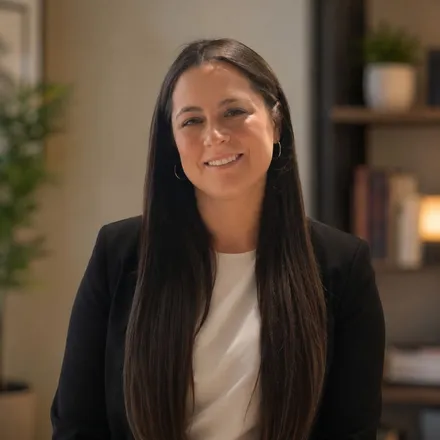
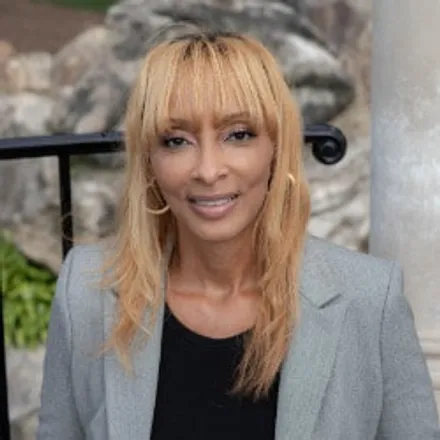
I’m Dr. Tania, a passionate and skilled licensed clinical psychologist who provides personalized, knowledgeable, and compassionate mental health services. I weave together my strong clinical experience and my authentic presence with my patient’s desire to make a change, enabling lasting growth and healing to occur.
I am an experienced clinician with a strong educational and training background. I have practiced in various settings, treating a broad spectrum of symptoms, concerns, and presentations. My experience and knowledge are well integrated with connection, relationships, and my genuine caring presence.
I am an independently practicing licensed clinical psychologist in Florida (license #PY12013), New York (license # 026156-01), Maryland (license #06995), and Texas (license #40010 ). In addition, I hold a PSYPACT license (APIT #15089), which is an interstate compact designed to facilitate the practice of telepsychology & telehealth across state boundaries, allowing me to work with individuals who reside in 42+ states across the United States. I offer telehealth services for individuals in the following states: AL, AZ, AR, CO, CT, DC, DE, FL, GA, ID, IL, IN, KS, KY, ME, MD, MI, MN, MO, NE, NV, NH, NJ, NC, OH, OK, PA, RI, SC, TN, TX, UT, VA, WA, WV, WI, WY. I see all patients exclusively via telehealth at this time.
I am dedicated to helping my patients develop a deeper understanding of themselves, their relationships, and their strengths and helping them understand and discover what drives their actions and behaviors. I take pride in providing high-quality, compassionate, empirically-based care rooted in my extensive doctoral education and extensive ongoing professional development.
Services Offered
My experience has equipped me to provide an array of mental health services tailored to meet each individual’s unique needs. These services include individual therapy, couples therapy, psychological assessments—specializing in ADHD—vocational and career assessments, as well as sports psychology and performance enhancement for high-performers, including C-Suite executives, athletes, artists, and medical professionals.
Individual Therapy:
I work with adults and adolescents experiencing various challenges, such as anxiety, depression, trauma, PTSD, phobias, eating disorders, body image issues, internet and social media addictions, relationship and interpersonal difficulties, obsessions, compulsions, perfectionism, burnout, insomnia, and other psychological presentations within the human experience. I also support individuals navigating life transitions, communication challenges, attachment difficulties, relational concerns, and complex family dynamics. Services are rooted in evidence-based approaches and treatment is infused with compassion and care.
Couples Therapy:
As a therapist trained in Gottman Method Couples Therapy Levels 1 and 2, I offer couples therapy grounded in the most comprehensive, evidence-based approach available today.
Psychological Assessments:
I provide a wide range of psychological testing and assessments, including comprehensive ADHD/ADD evaluations, documentation for LSAT/MCAT/GRE/SAT accommodations, diagnosis clarification, ESA letters, giftedness/IQ testing, assessments for academic concerns, and career/vocational evaluations. Please note that my practice does not prescribe psychotropic medications. However, I collaborate closely with psychiatrists and can provide referrals if needed.
My Theoretical Orientation
I provide high-quality mental health services that are both scientifically grounded and deeply compassionate, fostering a friendly, accepting, and inclusive environment for all patients. My extensive training spans various therapeutic approaches, including psychodynamic and psychoanalytic psychotherapy, as well as cognitive-behavioral treatments like Cognitive-Behavioral Therapy (CBT), Acceptance and Commitment Therapy (ACT), Dialectical Behavioral Therapy (DBT), Mindfulness-Based CBT (MB-CBT), Trauma-Focused CBT (TF-CBT), and manualized treatments for insomnia, phobias, and PTSD. I also enjoy incorporating Positive Psychology, Interpersonal/Relational Therapy, Existential-Humanistic Therapy, and Motivational Interviewing to support meaningful change. I approach mental health from a holistic perspective, recognizing the interconnectedness of mental, emotional, physical, and spiritual facets. I am committed to providing a compassionate listening space where you are invited to reflect and explore yourself, understanding your deepest challenges and strengths. Through patient listening, reflecting, shared inquiry, and various evidence based interventions, I strive to help you become more aware of your patterns and thoughts, fostering greater self-understanding and clarity. My goal is to support you in making meaningful and skillful choices that align with your true self.
My Therapeutic Style
My approach to mental health, in general, is characterized by an accepting and caring environment that is collaborative in nature. I am authentic, down-to-earth, intentional, and spontaneous in session, which lends itself to a truly collaborative and growth-promoting experience. Therapy with me is a collaborative, action-oriented process providing you the opportunity to foster new perspectives, discover your inherent worth, tap into your inner resources, and develop your capacity for resilience and new skills. I enjoy working from a holistic yet evidence-based approach.
I show up authentically for each patient, and I value transparency and provide my full presence. Patients who work with me can expect to explore feelings, beliefs, and behaviors, understand memories, process destructive relationships, and identify dysfunction, which will lead to a better understanding of themselves and others. During therapy, there is an ongoing effort to develop effective coping skills, decrease emotional distress, improve functioning, and resolve symptoms and problems. Each therapy session is a balance of meeting your present needs and long-term goals. Collaboratively, we will deepen your understanding of yourself your reactions to various emotions and, increase your psychological flexibility and create new perspectives.
My Wishes for You
I wish you a life full of love, happiness, fulfillment and health. I am committed to helping you build and find it! It is my greatest honor to accompany my patients on their journey toward deeper self-awareness, growth, the emergence from suffering while becoming a meaningful part of my patient’s lives.
Warmly,
Dr. Tania