Skip to Content
Therapists answer…

What is therapy like? What does a typical session with you look like?
Kara MarinoK

Kara Marino

Licensed Professional Counselor
Online Therapy
What do therapy sessions with you look like?
Clients can expect to leave our sessions feeling more centered and empowered. Together, we’ll establish strategies to reduce overwhelm and increase clarity. I strive to foster a supportive atmosphere where growth and healing are nurtured. You’ll gain practical tools for managing anxiety and navigating emotional shifts, all while cultivating a greater sense of control and fulfillment in your life. My goal is to help you move forward with confidence, knowing you’re not alone on this journey.
Do you feel like you’re constantly juggling too many things, always falling short, and never able to truly catch your breath? Whether you’re struggling to focus, overwhelmed by anxious thoughts, or navigating intense emotional shifts and feelings of self-doubt, it feels like you’re constantly being pulled in different directions. You want to feel more in control, more balanced, and more confident in managing life’s challenges. Let's work together to create a personalized plan to reduce feelings of overwhelm, regain clarity, and find a path to living with greater ease and fulfillment. I specialize in supporting adults with ADHD, anxiety, and trauma, as well as new and expecting moms. Together, we’ll develop tools to improve focus, manage emotions, or find calm in the chaos of motherhood. My warm, collaborative approach embraces humor and lightness, creating a safe space for growth and resilience as you regain balance in your life. I recognize the challenges you’re facing and the weight they carry, and I'm here to help you find a way forward. You deserve a space just for you where you feel understood and supported. Together, we’ll create a safe, collaborative environment that fosters hope, growth, and healing, empowering you to navigate your path forward.
Katie MullaneyK

Katie Mullaney

Art Therapist
Online & In-Person
What does a typical session with you tend to look like?
I incorporate mindful meditation, somatic awareness and making expressive/reflective art in almost all of my sessions. I find it to be a powerful practice to take a mindful pause to "check-in" with yourself just by observing what is present in your body and allowing your body to inform you of your current state of being. Notice how you are impacted by what is going on in your current world, and/or what energy you have been carrying around with(in) you (sometimes for months or even years). My clients explore this by creating visual reflections of what they observe, of their thoughts, behaviors, habits, and how they are experiencing emotions physically in their body.
I believe that everyone has the power within them to create positive shifts in the way one experiences and expresses their emotions, in turn creating positive shifts and experiencing their world around them. My intention is to help you uncover your power. I have worked as an Art Therapist since 2009 in the mental health and substance abuse fields. Most recently, I have worked in an acute psychiatric hospital setting for the past 9yrs and have been in private practice for 5yrs. I am proud to have assisted 2 organizations in developing their first Art Therapy programs. In private practice I work mainly with adults who struggle with anxiety and/or depression. We practice mindfulness and somatic awareness skills together with art therapy to minimize the barriers that anxiety and depression create in my client's lives.
Michael McCullyM

Michael McCully

Licensed Marriage and Family Therapist

What does a typical session with you tend to look like?

A typical session with me probably looks like starting out with just a simple question of "What should we focus on?". I'm the expert in therapy, you are the expert in you. And I trust a client's ability to know what's important to them what they want to focus on. So whatever it is that they want to focus on that's what we focus on. And then throughout this session I'm usually trying to do just three things. On the surface they sound pretty simple but by god they can be kind of difficult sometimes. And they are--I want to be starting with being empathetic, I want to hear--I want to listen as closely as I can to whoever it is that I'm listening to. I want to hear as deeply, as as close to the edges of whatever it is that they're sharing with me as I can. Even to the point where they may not be totally aware of a part of what they said or what it implies. And I want to communicate that I heard them and that I accept them and this is what I'm hearing, this is what I'm thinking, does this sound right, is this right for what's going on for you. And if I can do that that's like one-third of the therapeutic endeavor. The other part is accepting and prizing the person. That is whatever it is that they choose to share I'm still going to value them no matter what. I'm still going to think that they're a good person. I'm still going to enjoy the time that we have together. I may disagree with them, I may say "Maybe that wasn't such a good idea", but I'm still going to value them. They're not going to be judged when they're sitting down and talking with me. And most importantly of all perhaps is I'm going to do both of these things in a way that's genuine. In a way that's congruent with who I am in a way that's hopefully even transparent. Because heck if I'm not being real then what's the point? Then the relationship isn't real and how can the healing and the therapy be real. I've got to be genuine just as much as I've got to prize the client, as I've got to listen as deeply and empathetically as I can. So that's kind of the meat of the session and then at the end of sessions--again because the client is the expert in them, I like to ask them, "So what was helpful today? What was useful? What did you get out of this encounter?". And sometimes, indeed maybe most of the time it's just "I got to vent" or "you listened", but as therapy goes on there's a switch that starts to happen. The client shifts from, "you listened and that meant a lot" to "I heard myself, I understood myself, I allowed myself to feel these things, to think of these things, to explore these possibilities of being. And that is what I found so helpful today." I love that shift and it's exciting to see people make it. And in order to help facilitate that shift I like to ask for feedback on those three things that I talked about earlier. I ask folks on a scale of zero to ten, where ten is darn good but not perfect, "How listened to do you feel, how appreciated, how accepted do you feel. How genuine have I been?". And my ego loves to hear tens of course but what I'm really listening for are the nines the nine and a half's, the eights, god forbid a seven. The hint that there has been something that's gone awry. Because if I can get that feedback sooner rather than later, then I can move to address it, to adjust, to make some change to fix maybe something that went awry and in so doing I can make the relationship even stronger than what it was before. And then the rest is just sort of like scheduling and bills and all that junk, but the the heart and core I think of therapy are those three things: empathy, acceptance and prizing, and doing it all from a place that's genuine. That I hope is what a session looks like with me.
Dana StricklandD

Dana Strickland

Clinical Director
Online & In-Person
What does a typical session with you tend to look like?
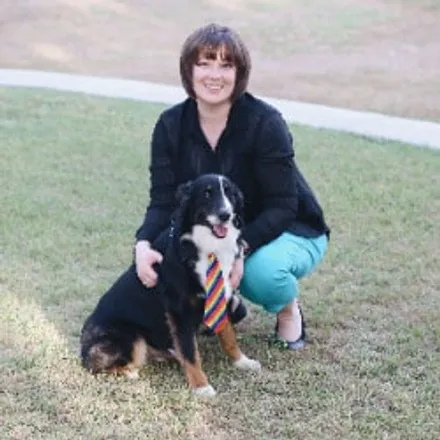
When someone reaches out to start new services, we do a (no cost) virtual consultation. Depending on the service you are looking for this consultation will either be 15-minutes or about an hour. We use this consultation time to get some basic information about what has prompted you to look for help and to do our best to make sure that the level and types of services that we offer are the most appropriate for your needs. This consultation time also allows you to ask us questions and to decide if you feel like we will be a good fit for you. If we both agree to move forward, we'll send you all of the intake paperwork and you'll have 7-days to complete your paperwork and return it to us. Once we have all of this squared away, we'll reach out to set up your first appointment/Intake. An Intake lasts about 90-minutes and the primary purpose of this appointment is to gather even more information about what you are experiencing now that you are seeking help for, the history of these issues, your personal history, family and social history. We'll also do some additional symptom assessments that help us with treatment planning. If you are doing in person services, when you come in, you'll likely see Andrea, our awesome Admin first who will get you checked in and collect any fees for the service that day. You'll also meet (or hear) Jack, my Australian Shepherd who sometimes likes to alert me that someone has come in. He likes to go out to the lobby to meet people and then will lead you to my office. He'll hang out during your session either sitting on/near your feet or taking a nap on the floor. Every now and again he'll get up on the couch with you and cuddle. Because I no longer offer ongoing therapy, only Extended EMDR sessions (90-minutes to 2-hours) or EMDR Intensives (half-day, full-day, 3-days) our sessions will be focused on moving through the 8 Phases of EMDR or using another applicable EMDR Protocol. The first session (after Intake) will be focused on showing you the options for Bilateral Stimulation (light bar, "buzzies", or sounds), and talk about the coping skills that you currently have in your toolbox and how you can use those to help you through the process of EMDR. In the next sessions we'll work on Resourcing - meaning that we'll work more on emotional containment and soothing and if necessary, install these resources using low intensity, low speed Bilateral Stimulation. We'll stay in the Resourcing Phase until it seems appropriate to move on. Next we'll talk through and identify the "targets" or experiences that you are wanting to work on before moving on to Reprocessing/Desensitization (EMDR Phase 4). When we are in Resourcing and Desensitization we won't be doing much talking because I want you to get in as much Bilateral Stimulation as possible to help you work through your targets as quickly and seamlessly as possible. EMDR does of course have other stages and we'll do those too as we get to them. Before you leave the office, we'll schedule your next appointment and talk briefly about self-care between sessions.
I am an EMDRIA Approved Consultant. I am an Army veteran and am passionate about providing trauma therapy for military, veterans, law enforcement officers and first responders. I offer Extended EMDR sessions (not covered by insurance), EMDR Intensives (not covered by insurance) and EMDRIA Consultation for clinicians seeking Certification. I graduated from Grand Canyon University in 2016, earning a Master of Science in Professional Counseling. I have worked in a variety of settings from community mental health, crisis response, to group practices.